case study banner

FOR THIS WORLD TO THRIVE ECONOMICALLY & ECOLOGICALLY, WE NEED INNOVATIVE SOLUTIONS.

HOW THAT SOLUTION WORKS

PROBLEM SOLVING

In this first stage itself, we approach the problem through a dual lens of enabling commerce as well as conservation. While the two may seem exclusive, it is our firm belief that the way ahead for a thriving and robust tomorrow, lies in working towards a solution that is always guided by an inclusive attitude.

SYSTEMS THINKING

Next up, we upend all existing rules of industry solutions. We do not allow ourselves to be limited by logic and data; instead we look for solutions in the intersection between nature and technology, capitalism and mutualism, intuition and science.

BUILDING COLLABORATION

To turn this design thought into reality, we work with all the stakeholders involved by supporting and enabling them via collaborations, partnerships or mentorships.

ACTION & TRACKING

Once the project gets off-the ground, we are fully present and available for the entire duration of the task, including on-ground monitoring, data collection, and strategic guidance.

THAT SOLUTION CASE STUDIES

PROBLEM

Bamboo planted for paper mills four decades ago has left Tadoba-Andhari Tiger Reserve degraded, with ageing trees and dense undergrowth.

Close view of green tree foliage and developing fruits on a tree in the Tadoba region.

Past forest management practices in the Tadoba-Andhari Tiger Reserve (TATR), Maharashtra, involved large-scale artificial propagation of bamboo to supply adjacent paper industries. Over four decades, bamboo came to dominate several areas, restricting the regeneration of other native plant species and reducing the replacement of mature trees. This resulted in widespread habitat degradation, which became particularly evident following the bamboo flowering cycle in 2024. The resulting decline in native floral diversity has also affected the habitat conditions required by several dependent species. Recognising these challenges, the Forest Department has identified the need to restore degraded habitats and improve their ecological functionality.

SOLUTION

From a core-area nursery, 15,000 saplings of 52 native species are restoring about 100 hectares of degraded Kolsa forest.

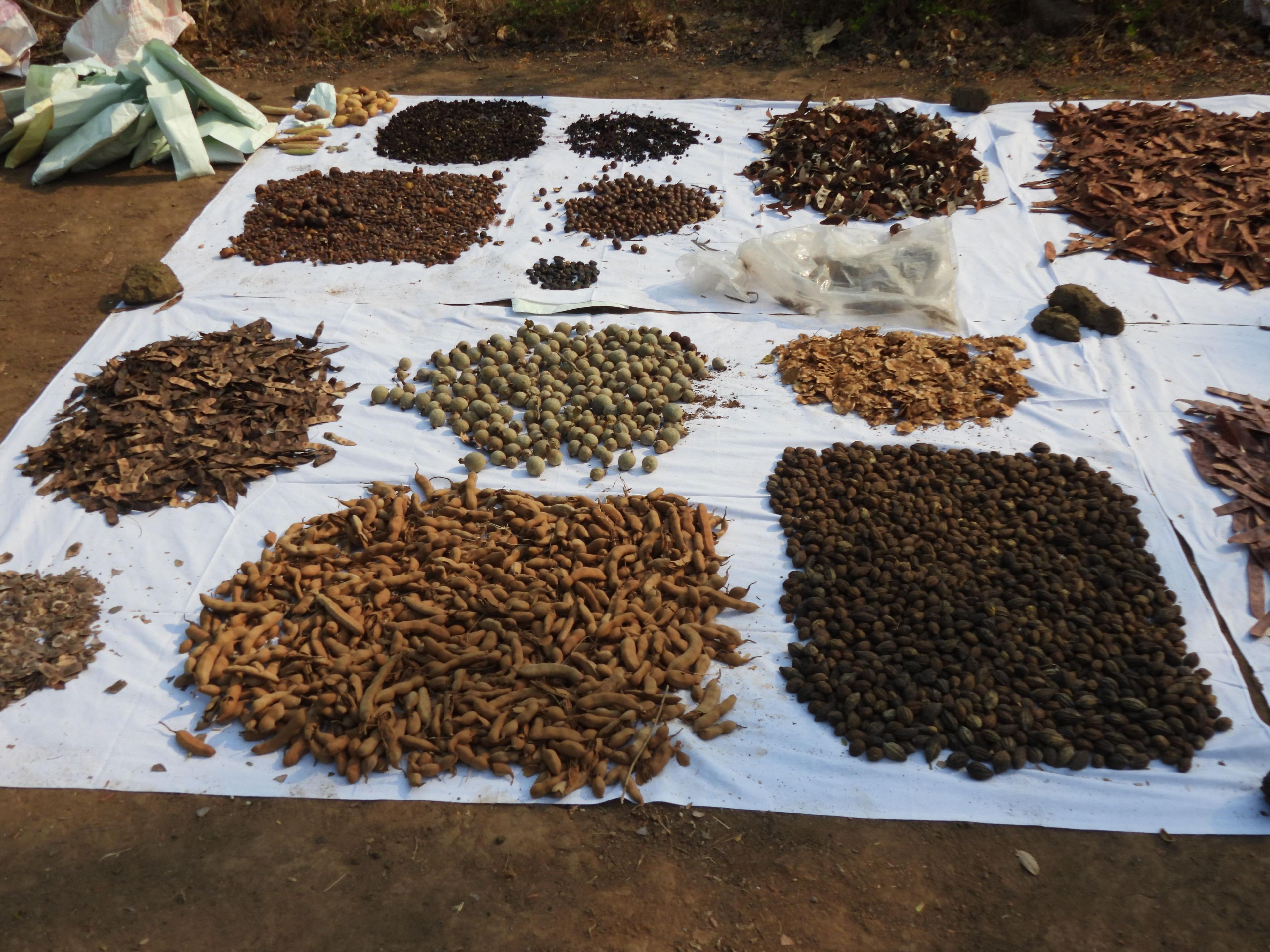
Different varieties of collected seeds and fruits arranged for native plant propagation and ecological restoration.

The Habitats Trust’s Eco-Restoration Programme, in partnership with the Tadoba-Andhari Tiger Reserve Conservation Foundation, has established a native plant nursery in the core area of TATR. Through this initiative, 15,000 saplings representing 52 regionally native tree species have been planted across approximately 100 hectares of degraded forest land in the Kolsa region. THT is also monitoring sapling survival and natural recruitment within restoration plots. The nursery is being further expanded to include native non-tree plant species, broadening the diversity of flora used in the restoration process.

MORE: Bamboo planted for paper mills four decades ago has left Tadoba-Andhari Tiger Reserve degraded, with ageing trees and dense undergrowth.
THIS PROBLEM

Conservation practitioners often work in disciplinary silos, limiting their on-ground impact.

Conservation practitioners often work in disciplinary silos, limiting their on-ground impact.

Challenges on the ground rarely fit within a single discipline, yet most conservation practitioners are trained and work within one. This limits their ability to bring ecological, social and technical perspectives together, to design effective interventions, and to reach the right networks and funding. Without this integrated capacity, projects risk weaker outcomes for both people and habitats.

THAT SOLUTION

Built an interdisciplinary programme to equip practitioners to work across disciplines

Built an interdisciplinary programme to equip practitioners to work across disciplines

With Shiv Nadar Institution of Eminence, we launched the Conservation Practitioners’ Programme. It is a nine-month certificate course with an in-person bootcamp, taught by over 25 experts across ecology, social sciences, technology and project design. From the first cohort of 16, six participants won seed grants of ₹3 lakh each, and the 2026 edition has grown to 26 participants.

MORE: Conservation practitioners often work in disciplinary silos, limiting their on-ground impact.
PROBLEM

Monoculture plantations and degraded habitats in Kerala’s Wayanad have weakened climate resilience and intensified human-wildlife conflict.

Closely arranged young plant seedlings growing in nursery beds at a native plant nursery.

Large areas of Wayanad’s forests comprise monoculture plantations or degraded habitats invaded by exotic species. These landscapes are less resilient to climate change and offer inadequate forage for wildlife, increasing human-wildlife conflict. Their ecological restoration requires a greater diversity and supply of native plant species across the district’s three ecoregions.

SOLUTION

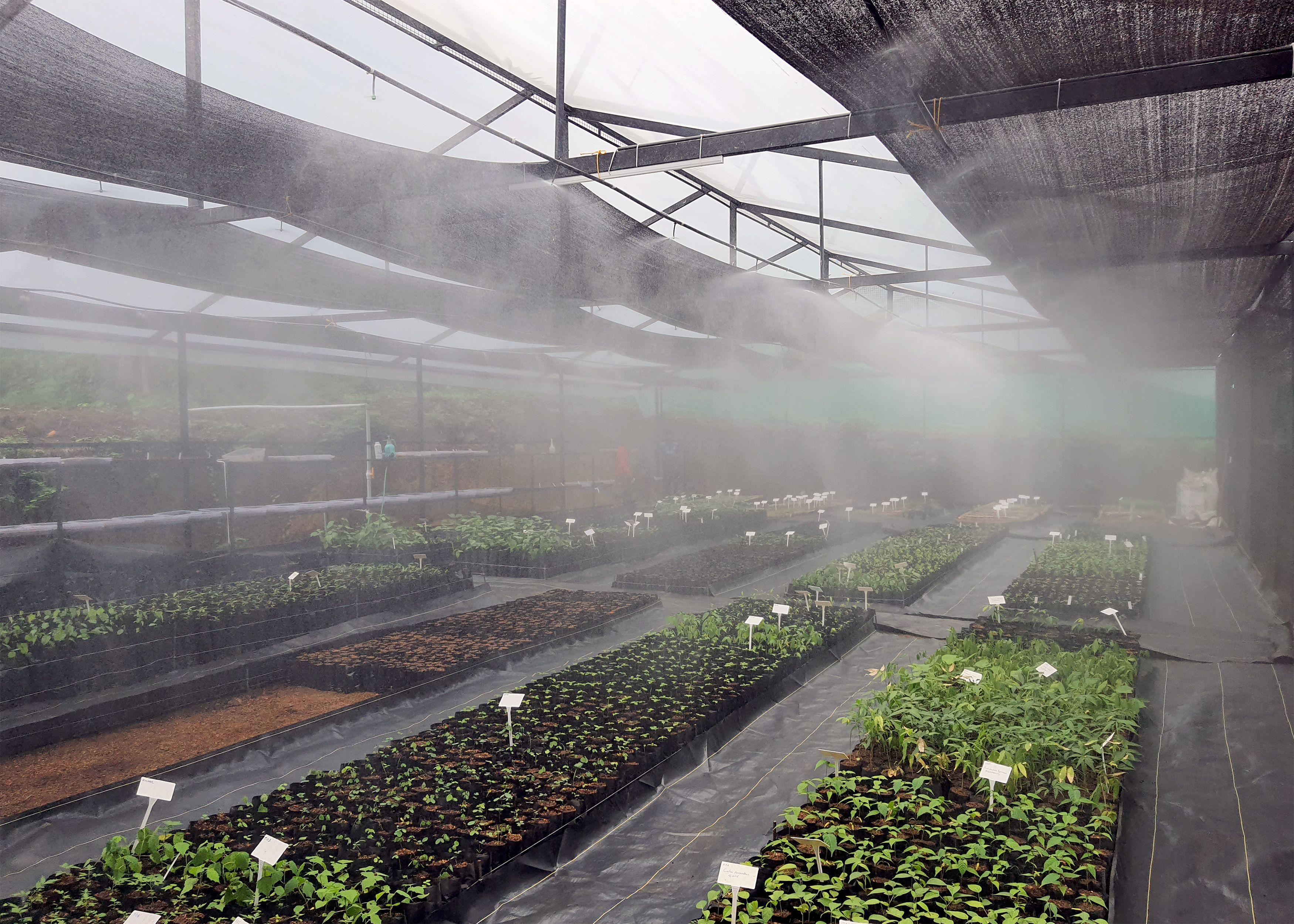
We established three nurseries that have raised over 80,000 saplings of 240 native tree and plant species to restore Wayanad’s forests.

Rows of native plant saplings growing inside a shaded nursery with mist irrigation facilities.

Large areas of forest land in Wayanad, Kerala, comprise monoculture plantations of exotic species or degraded native habitats invaded by non-native plants. These landscapes have reduced resilience to climate change and contribute to human-wildlife conflict due to inadequate natural forage. As these plantations are cleared for ecological restoration, a key challenge is the availability of sufficient regionally native plant species across the district’s three ecoregions: evergreen, semi-evergreen and moist deciduous forests.

MORE: Monoculture plantations and degraded habitats in Kerala’s Wayanad have weakened climate resilience and intensified human-wildlife conflict.