

| Project Title:
Community-Led Grassland Conservation and Fodder Security Around the Two Protected Areas of Vidarbha |
Project Location:
|
| Project Brief:
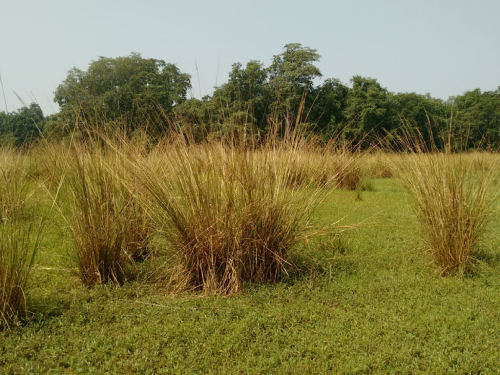
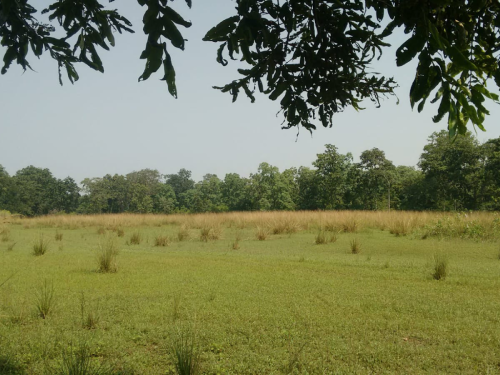
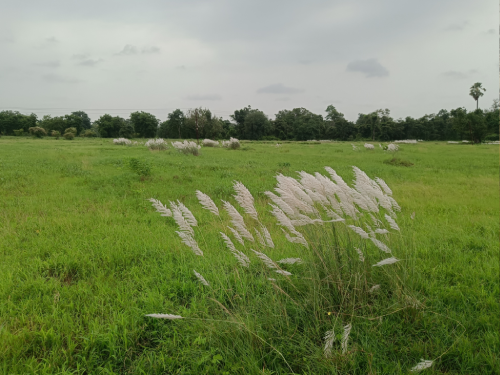
Grasslands in the Wardha and Yavatmal districts of eastern Vidarbha in Maharashtra are incredibly important buffer zones around protected forests, supporting local wildlife and providing vital fodder for traditional pastoral communities. However, these ecosystems are in severe danger because they are frequently misclassified as "wastelands" and are being lost to rapid land-use changes, non-native tree plantations, and the closing off of common grazing lands. As native, palatable grasses decline, local villages face a major fodder shortage. This forces their livestock to graze deeper inside the protected forests, which degrades wildlife habitats and threatens the survival of open-country species like the vulnerable Indian gray wolf and endangered dhole. To address this, this project will move from research to direct, on-the-ground action by establishing community-led grassland restoration around these protected forest edges. Working directly with local pastoralists, the team will restore degraded common and fallow lands by planting native, nutritious grass species like Pavnya and Marvel. They will also strengthen village institutions, such as Biodiversity Management Committees and breeders' groups, to help them set their own grazing rules and seasonal protection periods. Ultimately, this project will improve grassland health, secure a reliable local fodder supply to save villages money, and successfully reduce livestock pressure inside protected forests so that people and wildlife can safely coexist. |
Project Objectives:
The key objectives of the project are to conserve and restore native grassland habitats in Wardha and Yavatmal districts of Vidarbha, especially around protected areas. The project aims to regenerate native and palatable grass species, improve fodder availability, and reduce pressure on nearby forest habitats. Another objective is to strengthen community institutions for sustainable grassland management and grazing regulation. The project also seeks to integrate traditional ecological knowledge with basic scientific monitoring to guide long-term conservation and demonstrate a community-led model for grassland conservation in human-dominated landscapes. |
This flagship grant will primarily reach out to mid to large sized field work oriented organisations to create a two-way partnership for our common cause of conservation. This grant is directed towards the running costs of on-ground projects. The grant should enable the creation of a sustainable and replicable conservation model to address some of the key conservation issues in India.
This first of its kind initiative aims to secure and regenerate the overlooked and unaddressed habitats of the country that are in urgent need of conservation attention. These lesser-known habitats are home to an array of biodiversity, and serve as important connections between key wildlife landscapes and as havens for dispersal populations from the "celebrity" parks. Through the lesser-known habitats grant, we hope to secure and bring into the limelight these vital habitats.
In recent years, a great deal of attention has been given to the "glamour" species of the country such as tigers, leopards, elephants and rhinos. Unfortunately, several of our equally endangered species have not received the same level of conservation support. This unique grant aims to support conservationists working to secure a future for our lesser-known endangered species.
Across the country there are grassroots conservationists working dedicatedly, with little to no support, to protect our biodiversity. The work they do in their individual capacity has a huge positive impact on conservation in the country. This grant aims to recognize these conservation heroes and provide them a platform to expand their activities and garner further support for their work.
Successfully submitted applications and projects will be screened for eligibility, relevance of answers and authenticity of information. A team of experts, including sector specialists and external auditors, evaluate successful entries on the following parameters:
• Applicant Profile: Based on past performance and credentials, capacity to deliver, financial management, program management and other such criteria.
• Project Profile: Based on statement of need, clarity of objectives, measurability of impact, innovation, strategy and approaches, replicability, stakeholder participation, scalability and sustainability.
At the end of the First Level Screening and Shortlisting round 24 applications, 6 in each category, will move forward for Field Level Verification.
The Habitats Trust team will visit the proposed project locations to verify if details provided by the applicant are true to fact. Along with a Sub-Jury, The Habitats Trust team will shortlist twelve proposals, three in each category, move to the Jury Round. The work of all the applicants shortlisted for the Jury round will be published in The Habitats Trust Grants compendium, as a tribute to their efforts and achievements. Disseminated widely by HCL, this provides national and international visibility to the applicants.
The twelve shortlisted applicants, three in each category, will be invited to present their proposed projects in person to our Jury of eminent conservationists at the Jury Round. Recipients of The Habitats Trust Grants will be announced at a Felicitation Event the next day.