

| Project Title:
Evidence-Based, Community-Led Conservation of the Indian Wolf in Bahraich’s Intense Human–Wolf Conflict Landscapes: Strengthening Oecm Approaches |
Project Location:
|
| Project Brief:
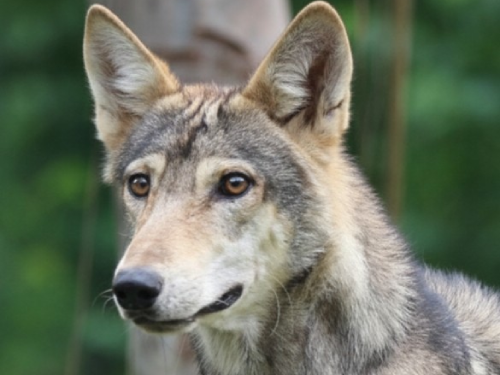
The Indian wolf is facing an acute survival crisis in the multi-use agricultural landscapes of Bahraich, Uttar Pradesh, where it lives almost entirely outside protected forests. These wolves share a highly populated mosaic of sugarcane fields, pastures, and floodplains with local communities, with spatial overlap and direct encounters being incredibly high. Recent tragic human fatalities caused by wolves have sparked widespread fear, panic, and retaliatory persecution, putting this vulnerable population at immediate risk of local extinction. Current interventions are largely reactive and focused on short-term conflict control, which fails to address why these encounters happen or how to protect both human lives and the wolf population. To address this crisis, the project will generate evidence-led, on-ground conservation actions by integrating wolf ecology and behaviour with community engagement. Wolf presence will be documented using drone and sign surveys, camera trapping, participatory approaches, and remote-sensing to identify conflict-prone areas. Detailed documentation of human–wolf conflict incidents will be undertaken to understand ecological, behavioural, and land-use factors associated with escalation. A stakeholder-participation-based programme will focus on community awareness and integrating community, administration, and governance, for wolf conservation. Community members will be trained in basic wolf monitoring and outreach, laying the foundation for a long-term community-based wolf conservation programme. The project will also assess the feasibility of managing parts of this multi-use landscape as potential Other Effective Area-based Conservation Measures (OECMs), providing evidence for a pathway for conserving large carnivores beyond protected areas. |
Project Objectives:
The objectives of this project are to:
|

This flagship grant will primarily reach out to mid to large sized field work oriented organisations to create a two-way partnership for our common cause of conservation. This grant is directed towards the running costs of on-ground projects. The grant should enable the creation of a sustainable and replicable conservation model to address some of the key conservation issues in India.
This first of its kind initiative aims to secure and regenerate the overlooked and unaddressed habitats of the country that are in urgent need of conservation attention. These lesser-known habitats are home to an array of biodiversity, and serve as important connections between key wildlife landscapes and as havens for dispersal populations from the "celebrity" parks. Through the lesser-known habitats grant, we hope to secure and bring into the limelight these vital habitats.
In recent years, a great deal of attention has been given to the "glamour" species of the country such as tigers, leopards, elephants and rhinos. Unfortunately, several of our equally endangered species have not received the same level of conservation support. This unique grant aims to support conservationists working to secure a future for our lesser-known endangered species.
Across the country there are grassroots conservationists working dedicatedly, with little to no support, to protect our biodiversity. The work they do in their individual capacity has a huge positive impact on conservation in the country. This grant aims to recognize these conservation heroes and provide them a platform to expand their activities and garner further support for their work.
Successfully submitted applications and projects will be screened for eligibility, relevance of answers and authenticity of information. A team of experts, including sector specialists and external auditors, evaluate successful entries on the following parameters:
• Applicant Profile: Based on past performance and credentials, capacity to deliver, financial management, program management and other such criteria.
• Project Profile: Based on statement of need, clarity of objectives, measurability of impact, innovation, strategy and approaches, replicability, stakeholder participation, scalability and sustainability.
At the end of the First Level Screening and Shortlisting round 24 applications, 6 in each category, will move forward for Field Level Verification.
The Habitats Trust team will visit the proposed project locations to verify if details provided by the applicant are true to fact. Along with a Sub-Jury, The Habitats Trust team will shortlist twelve proposals, three in each category, move to the Jury Round. The work of all the applicants shortlisted for the Jury round will be published in The Habitats Trust Grants compendium, as a tribute to their efforts and achievements. Disseminated widely by HCL, this provides national and international visibility to the applicants.
The twelve shortlisted applicants, three in each category, will be invited to present their proposed projects in person to our Jury of eminent conservationists at the Jury Round. Recipients of The Habitats Trust Grants will be announced at a Felicitation Event the next day.