

| Project Title:
Croak, Coexist, and Conserve: Conservation of Threatened Amphibians in Human-Shaped Landscapes of River Catchments With Community Participation in Western Ghats |
Project Location:
|
| Project Brief:
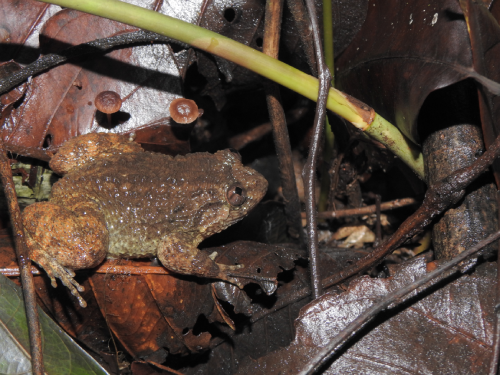
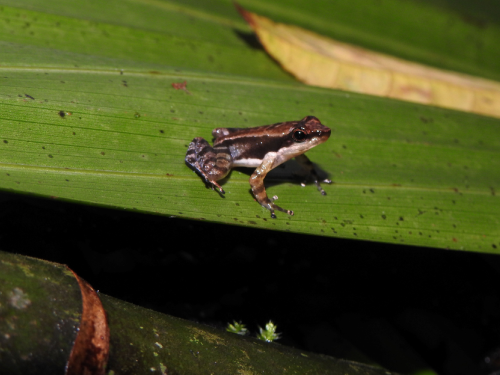
India holds 5% of global amphibian diversity, of which about 200 of the 475 species are threatened. The Western Ghats, a global biodiversity hotspot, harbors 252 amphibian species with over 80% endemic species. A significant portion of this landscape lies outside formal protected areas, existing as private agroforests (coffee, tea, areca, coconut, and paddy) interspersed with sacred groves and village forests. While these human-shaped landscapes support viable amphibian populations, they face severe threats from habitat fragmentation, pesticide use, agricultural intensification, and linear infrastructure development. This project aims to conserve threatened amphibian species and protect over 100 square kilometres of vital habitats across human-dominated landscapes in the Western Ghats of Karnataka. It will bridge a critical conservation gap by involving local communities and private landowners as active conservation stakeholders. Using non-invasive monitoring tools, including Passive Acoustic Monitoring devices, water analysis kits, and citizen-science mobile apps, the project will monitor species and their habitats. With local landowners and community groups, they will also establish 'Batrachariums' – serving as designated, community-monitored safe zones for amphibians, in private agroforests. As an outcome, this will protect the habitats of 10 endangered amphibian species, build a trained network of local citizen scientists, and develop a comprehensive in-situ amphibian conservation action plan for the region. |
Project Objectives:
The project has the following objectives:
|
This flagship grant will primarily reach out to mid to large sized field work oriented organisations to create a two-way partnership for our common cause of conservation. This grant is directed towards the running costs of on-ground projects. The grant should enable the creation of a sustainable and replicable conservation model to address some of the key conservation issues in India.
This first of its kind initiative aims to secure and regenerate the overlooked and unaddressed habitats of the country that are in urgent need of conservation attention. These lesser-known habitats are home to an array of biodiversity, and serve as important connections between key wildlife landscapes and as havens for dispersal populations from the "celebrity" parks. Through the lesser-known habitats grant, we hope to secure and bring into the limelight these vital habitats.
In recent years, a great deal of attention has been given to the "glamour" species of the country such as tigers, leopards, elephants and rhinos. Unfortunately, several of our equally endangered species have not received the same level of conservation support. This unique grant aims to support conservationists working to secure a future for our lesser-known endangered species.
Across the country there are grassroots conservationists working dedicatedly, with little to no support, to protect our biodiversity. The work they do in their individual capacity has a huge positive impact on conservation in the country. This grant aims to recognize these conservation heroes and provide them a platform to expand their activities and garner further support for their work.
Successfully submitted applications and projects will be screened for eligibility, relevance of answers and authenticity of information. A team of experts, including sector specialists and external auditors, evaluate successful entries on the following parameters:
• Applicant Profile: Based on past performance and credentials, capacity to deliver, financial management, program management and other such criteria.
• Project Profile: Based on statement of need, clarity of objectives, measurability of impact, innovation, strategy and approaches, replicability, stakeholder participation, scalability and sustainability.
At the end of the First Level Screening and Shortlisting round 24 applications, 6 in each category, will move forward for Field Level Verification.
The Habitats Trust team will visit the proposed project locations to verify if details provided by the applicant are true to fact. Along with a Sub-Jury, The Habitats Trust team will shortlist twelve proposals, three in each category, move to the Jury Round. The work of all the applicants shortlisted for the Jury round will be published in The Habitats Trust Grants compendium, as a tribute to their efforts and achievements. Disseminated widely by HCL, this provides national and international visibility to the applicants.
The twelve shortlisted applicants, three in each category, will be invited to present their proposed projects in person to our Jury of eminent conservationists at the Jury Round. Recipients of The Habitats Trust Grants will be announced at a Felicitation Event the next day.